
Context, Clarity and Compromise: Lessons from a Hotel Bathroom
We’ve all seen examples of terrible bathroom signs (check out reddit.com/r/BadToiletSign/ - at this point, I think we're all being Punk’d). The signs in this hotel in Manchester weren’t the worst I’ve seen, but the combination of designs reminded me of two important lessons in experience design.
Lesson #1: Context is everything.
As I made my way to the bathroom via an intricate maze of stairwells, corridors and corners, following the “WC” signs on the walls, I was greeted by the below image on the cubicle door.
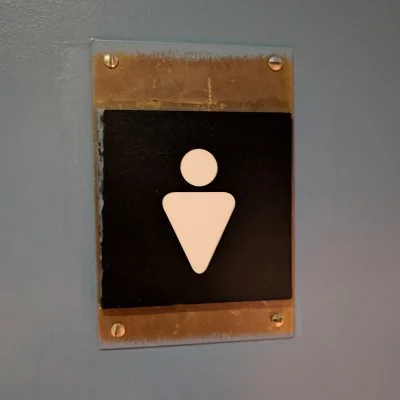
Having only seen one entrance to the bathroom I had assumed it was gender-neutral (or simply put - not gendered), so this image confused me.
My first thought: “Am I supposed to use a certain cubicle?”
My next thought: “Who is this cubicle for?”
I looked to the cubicle on the left and it had “WC” on the door. Mission accomplished. This aligned with the many signs I had followed from the co-working space upstairs. But I was still curious about the first sign…
On my way out I noticed the cubicle opposite had the below image on the door.
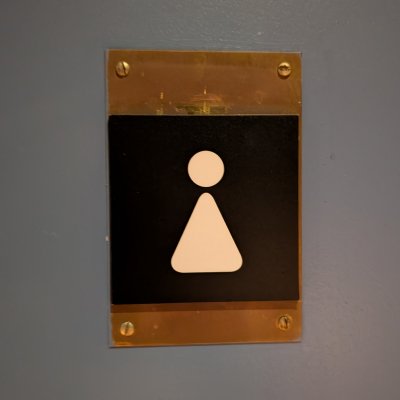
Suddenly, the first cubicle’s meaning became clear! This circle and inverted triangle (representing a skirt) is the more familiar symbol for the women’s bathroom. Therefore the other must have been the mens.
Without the context of the woman's symbol, the first sign meant nothing to me.
This simple observation highlights a universal principle: people interpret information based on context and prior experience. Humans rely heavily on mental models and without consistent patterns, we can hesitate, make errors, or experience frustration.
The hotel could improve this experience by:
Standardizing symbols for clarity (e.g., pants/legs for men, skirt for women)
Changing placement of symbols to leverage the recognition that comes from the stronger conventional design (in this case, the women's symbol)
Or (my preference) as the cubicles were functionally identical, removing gendered symbols entirely and label all “WC”
This is a simple example, but it highlights an important lesson: context drives meaning. If users must infer, compare, or guess, you’ve added unnecessary cognitive load.
Lesson #2: You can’t please everyone.
Now let’s talk about the cubicles that were labelled “WC”.
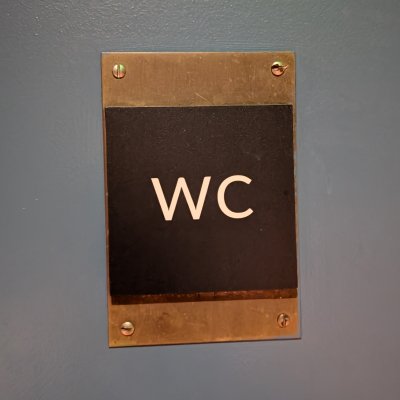
It seems the hotel tried to accommodate everyone - binary gendered cubicles plus gender-neutral options. They are people-pleasing, but at what cost?
Attempting to satisfy all user groups introduced complexity and confusion. Providing three options for the exact same experience can slow decisions and create friction. Users don’t want to waste time deciphering outdated symbols and images - especially when they need the loo!
If you’re still trying to please everyone - STOP.
Instead, be ready to make some trade-offs (necessary compromises) and ensure your solution designs are grounded in:
User research! Listen to what your users want.
Simplicity over complexity: Most people prefer streamlined, intuitive experiences - and so will your team!
Authenticity: stay true to your brand story and objectives instead of jumping on every design trend (more on this later!)
You may think that this level of detail over a bathroom cubicle is tedious and unnecessary - but I like to focus on everyday experiences that affect everyone. And for some, this experience can be stressful and even dangerous. Observing how people interact with common experiences can inform smarter, more inclusive strategies and better decisions across any business.
Subscribe for more practical tips on how to create designs and products that are right for your customers, brand and business.
